Field note · Maintenance
A Year of HVAC Maintenance in El Cajon
Twelve months of small, specific tasks that keep a system steady through an inland cooling season and a mild winter. A month-by-month calendar.
October 27, 2026 · 8 min read
Maintenance works best as a rhythm rather than an emergency response. In this climate the rhythm has two peaks, one before the cooling season and one before heating, with light checks in between that take minutes rather than hours.
Here is the calendar we recommend to homeowners in El Cajon, with the reason each item earns its place.
March
March: the cooling system wakes up
The first warm week is the right time to look at the outdoor unit before it matters. Clear leaves and lint from the cabinet, rinse the coil gently from the inside out, and confirm the disconnect is on and the breaker has not tripped over winter.
Indoors, replace the filter and note the date on the frame. A filter that loads in six weeks in March will load faster in July, and the written date turns a guess into a pattern.
April
April: a measured cooling visit
This is the visit that pays for the season. Coil cleaning, capacitor and contactor inspection, refrigerant superheat and subcooling, condensate drain and float switch testing, temperature split and thermostat calibration all happen in one appointment.
The point is the baseline. Every reading recorded in April gives the August diagnostic a comparison, which is how a slow charge loss or a blower losing speed gets caught before it becomes a no-cool call.

May through September
May through September: light checks, not overhaul
During peak cooling, monthly attention is enough: filter condition, outdoor clearance, and a listen at the unit for new noises. Keep two feet clear around the condenser and trim plants that have grown into the airflow path.
Watch the condensate line. A slow drain clogs quietly, and the first sign is usually water at the air handler rather than a comfort complaint. A cup of water poured into the drain pan once a month tells you whether it is moving.
October
October: the heating side gets its turn
Before the first cold morning, the heating sequence should be tested: ignition, flame sensing, blower operation and, on a heat pump, the reversing valve and auxiliary heat staging. A furnace that has sat idle since February can surprise a household on the first cold night.
Combustion and venting checks belong on the same visit. A heat exchanger inspection, flue draft confirmation and gas pressure reading are not tasks a homeowner can perform, and they are the reason the fall visit matters.
November through February
November through February: small habits
Winter here is mild, which makes it easy to ignore the system entirely. Change the filter on the interval your spring readings suggested, keep the outdoor unit clear of debris, and run the heat for a few minutes every couple of weeks so seals and bearings do not sit idle for months.
If the house has a heat pump, listen during a defrost cycle at least once. Steam and a pause are normal; ice that stays after the cycle is not.
Keep the file, and the file keeps working
Keep the file, and the file keeps working
A folder with the readings, the filter dates and the repairs is worth more than any single visit. It shows a technician what has already been tried, it makes a decline visible, and it turns a future replacement decision into an arithmetic question rather than a guess.
Two visits a year and a few minutes a month is the whole program. Everything else in this calendar is a detail of those three habits.
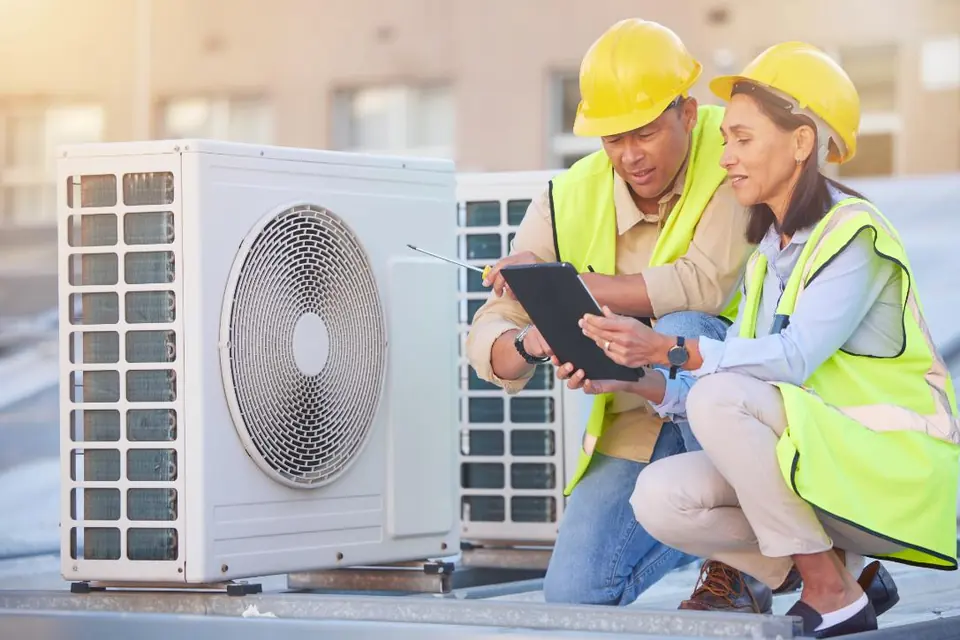
Technician in a safety vest adjusting the service panel of a rooftop unit at a GoodNest service visit in El Cajon.
Questions
Maintenance, answered
Next step
Start the calendar this month
Tell us when the system was last serviced and we will set the first visit around your schedule.