
Field note · Heat pumps
A Heat Pump Guide for Inland El Cajon Homes
Mild winters and long cooling seasons suit heat pump technology well. Here is how the equipment behaves here, and what commissioning actually requires.
November 4, 2026 · 8 min read

Heat pumps have moved from a niche choice to a mainstream one in East County, and the climate is a good part of the reason. Winters are mild enough that a compressor can carry the heating load most mornings, and the same equipment handles a cooling season that runs from May into October.
What follows is the practical version: how the equipment behaves here, where installations go wrong, and what to ask for at commissioning.
One system, two directions, and a reversing valve in the middle
A heat pump moves heat rather than creating it. In cooling mode it behaves like any air conditioner, rejecting heat outdoors. In heating mode the reversing valve flips the refrigerant path so the outdoor coil absorbs heat from the air and the indoor coil releases it into the house.
That is why the equipment can heat a home when the outdoor air is cold: there is still thermal energy in it. Efficiency drops as the outdoor temperature falls, which is exactly why the local climate matters so much to the result.
El Cajon winters are gentle on the compressor
Overnight lows in the valley rarely push a modern heat pump into emergency heat, which means most heating hours are handled at a fraction of the cost of electric resistance. Homes at higher elevation, toward Crest or the foothills, see colder mornings and need a properly set balance point.
The balance point is the outdoor temperature at which the system hands over to auxiliary heat. Set too high, auxiliary heat runs on mild nights and erases the savings. Set too low, the house drifts during a cold snap. It is a commissioning decision, not a factory default.
Sizing is a load question, not a square-footage guess
Heat pumps lose capacity as outdoor temperature drops, so a unit sized only for the cooling load can struggle on the coldest morning. A room-by-room load calculation accounts for window exposure, insulation, ceiling height and the direction the house faces.
Oversizing is not the safe answer either. A unit that is too large short-cycles, dehumidifies poorly in summer and wears its compressor with frequent starts. The right size sits between the two errors, and the calculation is the only way to find it.
Defrost cycles look alarming and usually are not
In heating mode the outdoor coil runs colder than the air around it, so moisture condenses and can frost. The system periodically reverses to melt that frost, which produces steam, a whoosh and a pause in heating. That is normal operation.
What is not normal is frequent defrost on a mild day, ice that persists after the cycle, or water pooling under the unit. Those point to a sensor, a drain or a charge issue and are worth a diagnostic visit rather than a wait-and-see.
Ductwork decides whether the efficiency shows up
A high-efficiency heat pump connected to a leaky, undersized duct system delivers ordinary comfort with an extraordinary energy bill. Because the equipment moves more air than a furnace of the same capacity, the distribution has to be able to carry it.
Before installation we check static pressure, return capacity and the condition of the trunk. If the duct system needs work, that work belongs in the same project, not a year later after the first summer of disappointment.
Commissioning is where most of the value is set
After installation, the system should be charged by weight or verified with subcooling, airflow confirmed against the design, the balance point and auxiliary lockout set, and the thermostat configured for the equipment's staging. Skipping that step is the most common reason a good heat pump underperforms.
Ask for the readings in writing. Charge, airflow, static pressure and the balance point are the four numbers that describe whether the installation was finished or merely connected.
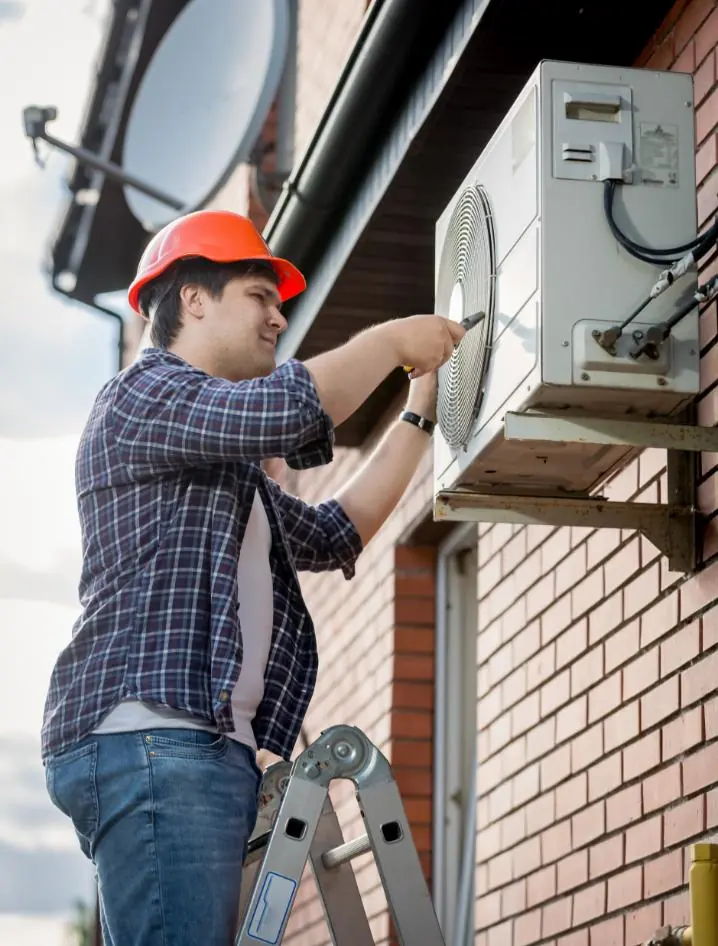
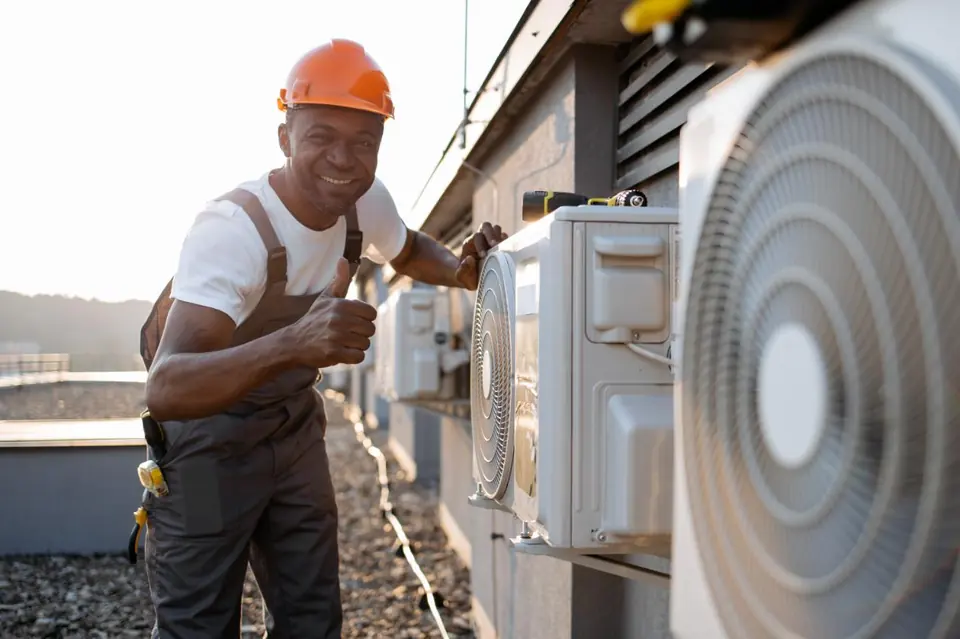
Technician on a ladder servicing a wall-mounted outdoor unit at a GoodNest service visit in El Cajon.
Questions
Heat pumps, answered
Next step
Planning a heat pump for an inland home
Send the house details and what the current system struggles with. We will model the load before naming equipment.